


Dr. Nuria Roda / Alberto Tejero
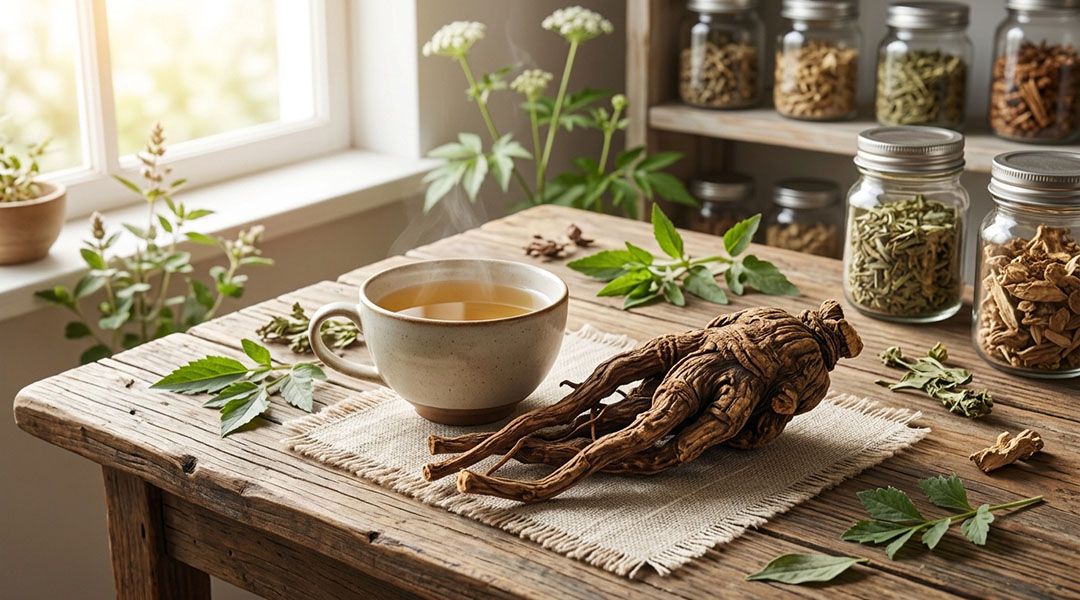
The frantic pace of daily life causes our body to release cortisol continuously. The body redirects the resources it would use to make progesterone to create more cortisol. As a result, estrogen dominance, painful periods, missing cycles, or premenstrual syndrome appear. For this problem, Dong Quai is consolidated as a fascinating botanical tool to support menopause and rescue the modern woman from hormonal chaos induced by exhaustion and daily stress. Nowadays, people live in a state of constant alert. Self-demand, work overload, and lack of sleep push us toward a silent exhaustion. This frantic pace causes our body to release cortisol continuously. Since our organism remains primitive in this regard, it interprets this stress as an imminent danger. Among other defense mechanisms, its response is to shut down the reproductive system, because it is not safe to gestate while fleeing from a threat. To achieve this, the body redirects the resources it would use to make progesterone to create more cortisol. As a result, estrogen dominance, painful periods, missing cycles, or an equally incapacitating PMS (premenstrual syndrome) appear. For this problem, one can turn to natural supplements that regulate hormonal cycles, among which Dong Quai (Angelica sinensis) stands out. It is a plant native to Asia whose root has been used in Traditional Chinese Medicine for more than 2,000 years. Frequently nicknamed “female ginseng,” it is known for its remarkable capacity as a tonic, for improving circulation, and for supporting the female reproductive system. It is estimated that between 70% and 90% of women of reproductive age suffer from dysmenorrhea (menstrual pain), and for almost 20%, this pain is so severe that it is incapacitating and interferes with their daily lives.1 From a modern biochemical perspective, Dong Quai is rich in active compounds such as ferulic acid (a potent antioxidant and anti-inflammatory) and ligustilide (known for its antispasmodic effects on uterine muscles). Furthermore, it has mild phytoestrogenic effects that help modulate the hormonal environment, without being powerful enough to drastically alter the endocrine system. However, it is a mistake to think that it only serves women; men can also benefit, as the plant does not contain female hormone analogues or precursors. Therefore, they could benefit from properties such as improving circulation or reducing inflammation, which are important in any physiology.2 Below, the most important biological effects of this plant are discussed:
General Systemic Benefits Before reaching the uterus and ovaries, Dong Quai performs vital functions throughout the rest of the body. Its most studied active principles (such as ferulic acid, Z-ligustilide, and Angelica sinensis polysaccharides [ASP]) grant it the following general properties:
- Antioxidant and Anti-inflammatory Power: Both ferulic acid and ASP help reduce low-grade systemic inflammation, which slows down multiple modern inflammatory pathologies and premature cellular aging.3
- Hematopoiesis: ASP have been shown to stimulate red blood cell production and improve mild anemia states. Their mechanism of action acts as a potent targeted antioxidant shield, preventing structural damage to stromal cells in the marrow for optimal growth.4
- Circulatory Stimulation: It functions as a mild vasodilator and slightly inhibits platelet aggregation, meaning it helps blood flow more easily.5
- Immunomodulation: It helps balance the immune system, activating macrophages and lymphocytes when the body needs defenses, but modulating the response to avoid exaggerated autoimmune reactions.6
Female Physiology When all that rich, oxygenated, and inflammation-reduced blood reaches the pelvis, that is when Dong Quai earns its title of “female ginseng”. In gynecology, its supported applications are:
- Relief of Dysmenorrhea (Menstrual Cramps) Intense menstrual pain is usually due to severe uterine contractions caused by an excess of inflammatory prostaglandins that strangle blood vessels, leaving the uterus without oxygen. Dong Quai fights this problem from the root through three simultaneous actions. First, its ferulic acid halts the production of these molecules that trigger pain, acting as a natural anti-inflammatory. Second, the compound Z-ligustilide functions as a potent direct antispasmodic that relaxes uterine muscle tension, helping to soothe it and acting as a natural pain reliever during menstruation. Finally, its vasodilatory capacity allows blood to flow back into uterine tissue, causing ischemia to disappear and, with it, the throbbing pain.7,8
- Recovery from Amenorrhea and Scanty Cycles In Traditional Chinese Medicine, it is said that Dong Quai “moves and nourishes the blood”. In modern physiological terms, by promoting the dilation of pelvic blood vessels, it improves blood flow to the endometrium and ovaries. This is crucial for women who have lost their period (amenorrhea) due to stress, malnutrition, or after stopping hormonal contraceptives. When menstruation disappears or is very light, the body begins to leave the endometrium without the necessary blood supply to thicken because it no longer expects new gestations. Dong Quai acts as a natural restorer to reverse this process. On one hand, its active component Z-ligustilide promotes the creation of new pelvic capillaries, carrying oxygen and nutrients directly to the uterus to rebuild and thicken its tissue. Furthermore, it sensitizes cellular receptors, causing the endometrium to listen to activating hormone signals once again. Finally, by improving oxygenation and the quality of your red blood cells throughout the body, your brain perceives that you have sufficient energy, giving the green light to exit the survival mode triggered by stress and reactivate the menstrual cycle.9
- Modulation in Perimenopause and Menopause Dong Quai has a very mild phytoestrogenic effect. It does not replace the body’s estrogens, but its compounds can bind to estrogen receptors (ER) in an adaptogenic manner. This helps soften the hormonal drop, reducing the frequency and intensity of hot flashes, mood swings, and vaginal dryness. During menopause and the preceding stage, the sudden drop in estrogen causes hot flashes, mucosal dryness, and bone demineralization. Dong Quai helps modulate this transition safely without thickening the endometrium or raising tumor risk. Its phytoestrogens act selectively on ER-β, calming the nervous system and mitigating mood swings without stimulating breast tissue. In turn, its potent vasodilatory effect improves microcirculation, combating vaginal dryness and easing the joint stiffness typical of this stage. Finally, its compounds protect bone structure, slowing down the risk of osteoporosis.10,11
- Support in Premenstrual Syndrome (PMS) By decongesting the pelvis and improving liver function (the organ responsible for metabolizing and eliminating excess used estrogens), it helps prevent breast tenderness, bloating, and pre-period irritability. Acute PMS is often caused by systemic inflammation and the liver’s inability to eliminate excess estrogen (estrogen dominance), which leads to painful breasts, fluid retention, and mood disturbances. Dong Quai fights these symptoms from their metabolic origin. On one hand, it supports liver function, helping the liver filter and expel excess hormones before they cause breast tension or irritability. On the other hand, its potent vasodilatory effect decongests the pelvis, mobilizing blood and stagnant fluids that cause painful abdominal bloating. Finally, this plant’s antioxidants, such as ferulic acid, act by calming neuroinflammation, stabilizing the nervous system, and reducing headaches and emotional lability typical of the days leading up to menstruation.12
In summary and conclusion, Dong Quai consolidates itself as a fascinating botanical tool to rescue modern women from hormonal chaos induced by exhaustion and daily stress. It does not stop menopause, but by reactivating pelvic blood flow, turning off systemic inflammation, and stabilizing the cellular environment, it helps restore well-being in every phase of the reproductive cycle.
Bibliographic References:
- Ortiz, M. I., & Rangel-Flores, E. (2013). Dismenorrea: dolor crónico cíclico más común y mal tratado en las mujeres. Medwave, 13(06).
- Wu, J., Zhang, J., Tong, F., & Yu, H. (2025). Chemical Composition, Pharmacological Effects, and Clinical Applications of Danggui (Angelicae Sinensis Radix). Chinese medicine and natural products, 5(04), e199-e205.
- Ren, C., Luo, Y., Li, X., Ma, L., Wang, C., Zhi, X., … & Li, Y. (2025). Pharmacological action of Angelica sinensis polysaccharides: a review. Frontiers in Pharmacology, 15, 1510976.
- Xiao, H., Qi, R., Wang, Z., Xiao, M., Xiang, Y., Wang, Y., & Wang, L. (2020). Angelica sinensis polysaccharides ameliorate 5-flourouracil-induced bone marrow stromal cell proliferation inhibition via regulating Wnt/β-catenin signaling.
- Chen, L., Fan, B., Wang, F., Song, Y., Wang, X., Meng, Y., … & Sun, J. (2024). Research progress in pharmacological effects and mechanisms of Angelica sinensis against cardiovascular and cerebrovascular diseases. Molecules, 29(9), 2100.
- Li, T., & Zhao, X. (2026). Research Progress on the Immunomodulatory Effects by Dang Gui (Radix Angelica sinensis) and Its Active Chemical Components. Molecules, 31(7), 1153.
- Ge, X., Zou, J., Shi, Y., Guo, D., Zhao, C., Chen, Q., … & Zhang, X. (2025). Essential oil of Angelica sinensis: A review of its extraction processes, phytochemistry, pharmacological effects, potential drug delivery systems, and applications. Arabian Journal of Chemistry, 18.
- Liu, J., Guan, Y., Yang, L., Fang, H., Sun, H., Sun, Y., … & Wang, X. (2025). Ferulic acid as an anti-inflammatory agent: insights into molecular mechanisms, pharmacokinetics and applications. Pharmaceuticals, 18(6), 912.
- He, D., Song, Y., Xiao, H., Shi, S., Song, H., Cui, T. & Wei, A. (2024). Ligustilide enhances pregnancy outcomes via improvement of endometrial receptivity and promotion of endometrial angiogenesis in rats. Journal of Natural Medicines, 78(1), 42-52.
- Hirata, J. D., Swiersz, L. M., Zell, B., Small, R., & Ettinger, B. (1997). Does dong quai have estrogenic effects in postmenopausal women? A double-blind, placebo-controlled trial. Fertility and sterility, 68(6), 981-986.
- Hajirahimkhan A, Dietz BM, Bolton JL. Botanical modulation of menopausal symptoms: mechanisms of action? Planta Med. 2013 May;79(7):538-53.
- Qu, S., Qiao, M., Wang, J., Gao, M., Chen, D., Li, S. & Guo, Y. (2022). Network pharmacology and data mining approach reveal the medication rule of traditional Chinese medicine in the treatment of premenstrual syndrome/premenstrual dysphoric disorder. Frontiers in Pharmacology, 13, 811030.