



Dr. Nuria Roda / Alberto Tejero
Today’s fast-paced lifestyle—characterized by constant stress, environmental pollution, a sedentary routine, and the consumption of processed foods—causes a state of continuous, low-grade inflammation in our bodies. This leads to a silent increase in cardiovascular diseases, diabetes, and lower immune defenses that spark allergies. Quercetin phytosome is an antioxidant that strengthens the immune system and has demonstrated greater efficacy due to the improved bioavailability of the molecule.
Our body is designed to handle short-term inflammation, such as healing a wound or fighting off a temporary virus. However, today’s lifestyle—marked by constant stress, environmental pollution, physical inactivity, and the intake of processed foods—induces a state of ongoing, low-grade inflammation in our organisms.
What are the direct consequences of this constant overload in our daily lives?
- Metabolic saturation: Subjected to poor dietary habits, our metabolism collapses, translating into a silent increase in uric acid and triglyceride levels in the blood, thereby elevating the risk of cardiovascular disease and diabetes.
- Accelerated structural deterioration: This generalized inflammatory state travels through the bloodstream and attacks vulnerable areas like the joints, causing chronic pain, loss of function, and severe conditions such as erosive osteoarthritis.
- Immunological chaos and oxidative stress: Constantly on the defensive, our immune system loses its precision and overreacts to common elements like pollen, triggering severe allergic episodes.
Faced with this systemic collapse, conventional medical approaches often resort to polypharmacy to treat the cluster of conditions that define Metabolic Syndrome. This approach frequently generates a cascade of adverse side effects, such as gastric issues or drowsiness caused by medication used to treat symptoms, further saturating the body’s detoxification pathways.
This is where Quercetin stands out—a polyphenolic substance belonging to the flavonoid group. Some of the richest dietary sources of quercetin include apples, grapes, onions, berries, broccoli, citrus fruits, green tea, coffee, and red wine. For high-quality supplements, the raw material par excellence for extraction is the flower bud of Sophora japonica L. The issue with this molecule is its low absorption because it is highly sensitive to acting as an antioxidant; for this reason, a formulation using phytosome technology (Phytosome®) was developed. By coating the extract with sunflower lecithin, its absorption in the body is optimized up to 20 times compared to quercetin alone.
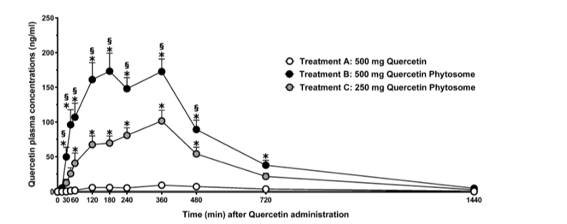
Figure 1: Pharmacokinetic profile of quercetin in the clinical study. Plasma concentrations of quercetin obtained after a single oral dose of unformulated quercetin at 500 mg/tablet and after a single oral dose of its corresponding lecithin formulation, Quercetin Phytosome, at doses of 500 or 250 mg.
This antioxidant targets multiple pathways, and because its bioavailability is enhanced, its action is no longer limited to muting a single symptom. Clinical studies are showing real benefits in humans (not just in vitro), notably in the following areas:
- Management of Musculoskeletal Pain and Chronic Inflammation Over the long term, chronic inflammation is known to erode joints. Quercetin phytosome has been shown to modulate key inflammatory markers such as NF-kB, COX, and LOX. In patients with erosive osteoarthritis of the hands, daily supplementation with 500 mg for 30 days achieved a pain reduction of approximately 67.2% (measured by the NRS scale). Beyond pain relief, patients demonstrated a 46.8% decrease in the functional impairment index (FIHOA scale), improving their mobility and quality of life.
- Control of Hyperuricemia and Cardiovascular Health Quercetin inhibits the enzyme xanthine oxidase (XO), which is responsible for producing uric acid in the body and is the same enzyme blocked by drugs like allopurinol. In clinical studies published in 2025, daily doses of 400 mg of quercetin significantly reduced uric acid levels in the blood (between 13% and 15%). Additionally, it demonstrated a potent triglyceride-lowering effect (up to 20.8% in obese patients) by regulating fat synthesis in the liver.
- Seasonal Allergy Relief Seasonal allergic rhinitis severely impacts the quality of life of those who suffer from it. Quercetin acts as a natural mast cell stabilizer, reducing histamine release. A clinical study demonstrated that using quercetin phytosome (combined with zinc and vitamin C) as a complementary therapy in children reduced the severity of nasal symptoms such as sneezing, itching, and congestion. Furthermore, it prevented the characteristic rebound effect or relapse that patients often experience when discontinuing traditional antihistamines while remaining exposed to pollen.
Another study evaluated the effects of repeated quercetin intake on allergic reactions. Evidence showed that sustained supplementation helped relieve occasional and seasonal eye and nasal discomfort in allergy-prone individuals. It also promoted an earlier resolution of acute symptoms by modulating the host’s hyperinflammatory response to allergens, collectively resulting in a direct and significant improvement in patients’ quality of life.
- Immune Support, Anti-Aging (Senolytic), and Physical Performance Quercetin is not a simple stimulant; it is a powerful immunomodulator. It supports the resilience of the immune system through its antioxidant and anti-inflammatory effects, modulating cytokine production and regulating immune cell activity. This is vital because, in many severe infections, tissue damage is not caused solely by the pathogen, but by our own body’s disproportionate inflammatory response.
It helps maintain immune balance against viral threats, potentially reducing the severity of symptoms in their early stages. In fact, during the pandemic, its ability to enhance protection against SARS-CoV-2 infection and help prevent severe COVID-19 cases was evaluated. A clinical trial assessed 120 healthcare workers exposed to high levels of the virus in hospital wards. Participants took 250 mg of quercetin phytosome twice daily for three months. Results confirmed that the supplement helped maintain health status in 75% of the medical staff. Of the few who fell ill, only 1 belonged to the quercetin group compared to 4 in the placebo group, also achieving complete clinical remission in just 7 days (half the time of the control group, which took 15 days). Over the long term (5 months), those taking the supplement maintained a 14% higher protection factor for staying healthy.
It acts as a senolytic agent by promoting cellular renewal through the elimination of old or “senescent” cells that refuse to die and secrete inflammatory toxins, encouraging cellular renewal and healthy aging.
Regarding sports, by fostering a balanced inflammatory response, it accelerates muscle recovery and improves performance in athletes subjected to high physical stress.
In summary and conclusion, quercetin phytosome has demonstrated superior benefit and efficacy over traditional formulas due to the enhanced bioavailability of the molecule. This allows full advantage to be taken of its immune benefits, such as soothing allergies and refining the precision response against threats like viral infections.
Bibliographic References:
- Di Pierro F, Rabbani F, Tareen M, Nigar R, Khan A, Zerbinati N, Tanda ML, Cazzaniga M, Bertuccioli A, Falasca P, Damiani G and Villanova N (2025) Potential pharmacological effect of Quercetin Phytosome™ in the management of hyperuricemia: results from real-life clinical studies. Front. Nutr. 12:1519459. doi: 10.3389/fnut.2025.1519459
- Miniati, I., Davolio, P. L., Busi, S., Petrangolini, G., & Galluccio, F. (2024). Quercetin Phospholipids Supplementation as a Natural Relief in Osteomuscular Health. PHYSICAL MEDICINE AND REHABILITATION-INTERNATIONAL, 11(5).
- Tosca, M. A., Ferrecchi, C., Meleca, V., Naso, M., & Ciprandi, G. (2025). A multicomponent food supplement with quercetin Phytosome®, zinc and vitamin C may be favorable in managing children with seasonal allergic rhinitis: A pilot study. Minerva pediatrics, 77(3), 279-280.
- Riva, A., Ronchi, M., Petrangolini, G., Bosisio, S., & Allegrini, P. (2018). Improved oral absorption of quercetin from quercetin phytosome®, a new delivery system based on food grade lecithin. European journal of drug metabolism and pharmacokinetics, 44(2), 169.
- Belcaro, G., Cesarone, M., Scipione, V., Scipione, M., Dugall, S., Hu, B., … & Di Rocco, P. (2020). Quercetin phytosome reduces the wheal response to histamine injection. Esperienze Dermatol, 22, 5-9.
- Yamada, S., Shirai, M., Inaba, Y., & Takara, T. (2022). Effects of repeated oral intake of a quercetin-containing supplement on allergic reaction: a randomized, placebo-controlled, double-blind parallel-group study. European Review for Medical & Pharmacological Sciences, 26(12).
- Di Pierro, F., Khan, A., Iqtadar, S., Mumtaz, S. U., Chaudhry, M. N. A., Bertuccioli, A., … & Zerbinati, N. (2023). Quercetin as a possible complementary agent for early-stage COVID-19: Concluding results of a randomized clinical trial. Frontiers in pharmacology, 13, 1096853.
- Indena S.p.A. (2025). Quercefit: Quercetina Indena Phytosome®. Indena. https://indena.com